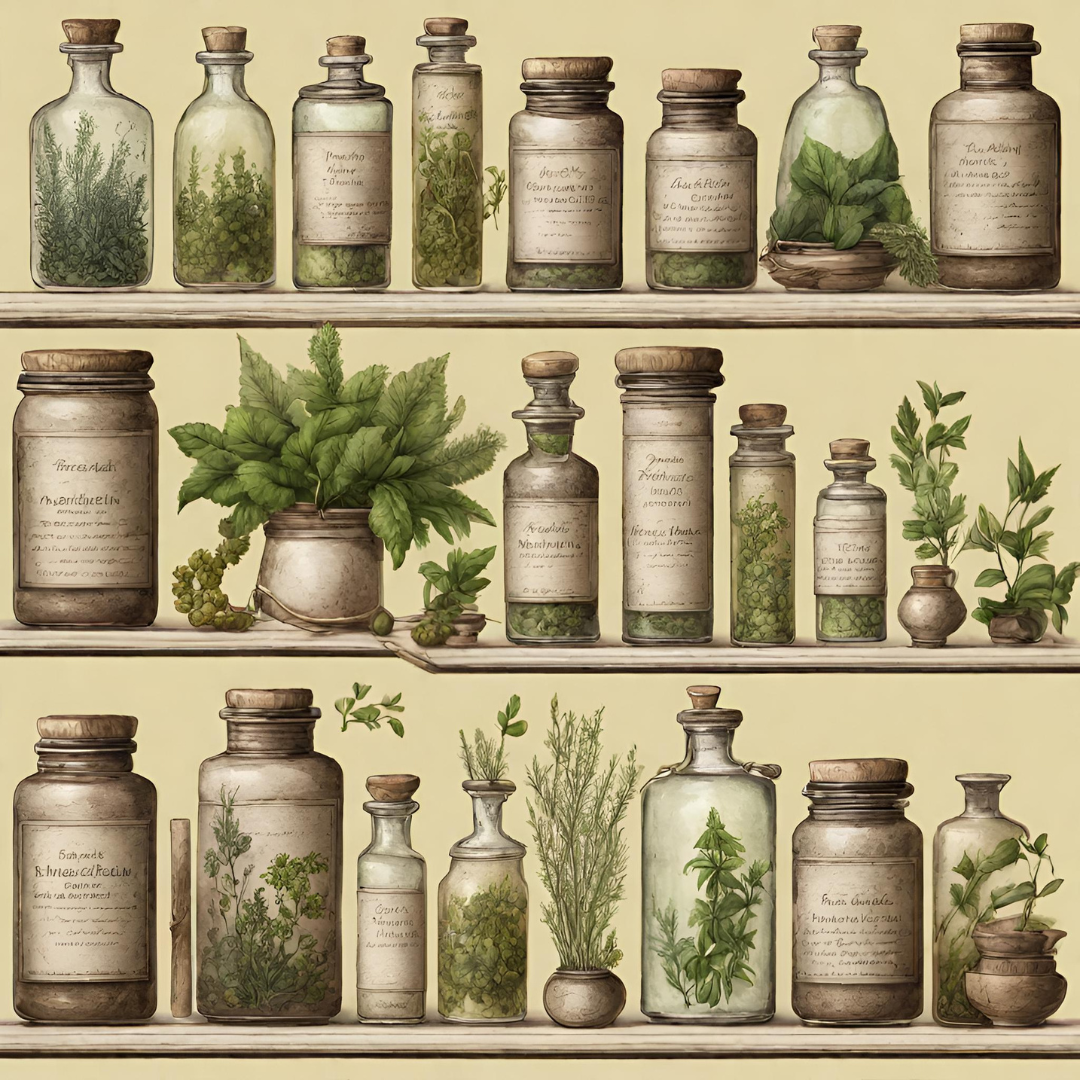
world apothecary:
unsettling herbalism
Not a lot of people are talking about where our herbs are coming from, but I'm not sure why.
Our home apothecaries connect us to people, cultures, communities, and ecosystems around the world.
As consumers, we have a lot of influence over the herb industry and the practices that bring the herbs to market It's time for us to let the herb industry know that we're here to protect Mother Earth and to stand up for human rights
There's a lot of messed up stuff that happens behind the scenes in the herb industry, and it’s important that we, as conscious consumers, keep an eye on it. I know that if you're here, you care about the earth and other people in the world, and you want to do what you can to influence the herb industry in a positive direction.
The reality is, the herb industry as a whole doesn't always care about these things, but we can make our voices heard and influence a change.
We’ve got this.
I'm really glad you're here.
red flags to look out for when you’re buying herbs
Red flags to look out for when you're buying herbs for your home apothecary:
prices are uncommonly low
lack of certifications
lack of transparency
they don't seem to care about what you care about
Why are these herbs so cheap?
Looking for a good deal is definitely not the best way to fill up your home apothecary.
Sometimes you'll find herbs on the market that are priced significantly lower than others are charging. There are a lot of reasons why that might happen and most of them are not good.
They're old.
Plants were over harvested or there was a lack of respect for the earth that brought a really big harvest that they can now offer for cheap.
The workers were not paid properly.
What to watch out for...
Biopiracy - the act of taking plants or traditional knowledge from indigenous communities without permission or fair compensation.
Extractivism - the idea that nature is here to consume and use for personal or corporate gain and profit.
Worker exploitation - when workers are treated unfairly or are put in vulnerable or unsafe situations as a result of their relationship with the herb suppliers.
Human rights violations - when people’s basic freedoms are restricted, disregarded, or denied.
Here are a couple of resources to help you watch out for extractivism in the herb industry and human rights violations in the herbs industry.
You can learn a lot about a company by looking at their mission statement and their "about me" page. If they care about the earth and human rights, they're gonna talk about it.
If they're not talking about it, they probably are not prioritizing it. Because.... capitalism :/
But you can be part of the movement that helps the herbal industry see that we DO care about this stuff.
Certifications to look for:
Certifications are not everything, but they give us a great place to start.
Fair Trade
USDA Organic
Rainforest Alliance
Ethical Wildcrafting
These certifications can help us look out for balanced earth stewardship, sustainable farming and harvesting practices, worker's rights, and community impact.
The call for transparency in the herb industry
It’s your right as a consumer to get answers about where your herbs are coming from.
Here are some more questions to help you find herb suppliers who share and prioritize your ethics.
Quick Check In (3-5 Questions)
Best for: Initial contact, email inquiries, first phone calls, browsing online shops
Where were these herbs grown, and can you trace a specific batch back to its farm or harvest site?
What certifications do you hold (Fair Trade, Organic, Regenerative, etc.), and can you share documentation?
How do you verify fair wages and safe working conditions for growers and harvesters throughout your supply chain?
Do you have direct relationships with the communities where you source, and how do you compensate traditional knowledge?
If prices seem unusually low: how are workers compensated compared to the retail price?
Deep Dive Evaluation Questions
Best for: Long-term partnerships, bulk buying, wholesale relationships
Environmental Stewardship
What sustainable farming or wildcrafting methods do you use to minimize soil depletion, habitat disruption, and chemical contamination?
What harvesting practices ensure the plant populations remain healthy for future generations?
How do you measure and track ecological impact across your supply chain?
Labor & Human Rights
How do you verify fair wages and safe working conditions for both internal staff and harvesters/growers throughout your supply chain?
Have any human rights or Indigenous treaty violations been documented in your sourcing regions? How do you respond?
What recourse do workers have if they experience exploitation or unsafe conditions?
Herb Origin & Community Accountability
Where were these herbs grown, and what specific ecosystems were they sourced from?
Which communities or Indigenous groups originally cultivated or stewarded these plants?
Do you have direct relationships with the grower communities, and how do you compensate traditional knowledge?
Can you provide detailed information about the specific farms, workers, and communities involved?
Transparency & Verification
How transparent are you about your supply chain? Can customers trace individual batches back to their origin farm or harvest site?
What certifications do you or your herbs hold (Fair Trade, Organic, Regenerative, etc.), and can you provide current documentation?
Are you willing to publish supplier names, farm locations, and worker compensation ranges publicly?
If prices seem unusually low: how are workers compensated compared to the retail price?
watching for green flags
Here are some examples of responses you get to the questions above, organized as Green Flags, Yellow Flags, and Red Flags:
FARMING & HARVESTING
🟢 GREEN: "We use regenerative organic methods—cover cropping, no till, compost inputs. Wild harvest follows population surveys to ensure 30% minimum regeneration. Here's our latest ecological report."
🟡 YELLOW: "We try to be environmentally responsible and avoid harmful chemicals."
🔴 RED: "All our herbs are certified organic so you don't need to worry about that."
LABOR & WAGES
🟢 GREEN: "Workers earn 120% of local living wage benchmarks. We conduct annual third-party audits, results available upon request. Workers can report concerns anonymously through our hotline."
🟡 YELLOW: "We pay competitive wages and believe in treating everyone well."
🔴 RED: "Fair trade stuff is overrated. We know our farmers are treated right because we've been in business for decades."
ORIGIN & COMMUNITY
🟢 GREEN: "These chamomile flowers come from Farm X in Region Y, Hungary. Our contact is Name Z. We visited last year and paid premium prices to the cooperative. Traditional knowledge belongs to the local farming families—they've grown this for generations."
🟡 YELLOW: "We source from Eastern Europe, mostly small family farms. We try to support them fairly."
🔴 RED: "It's from overseas. We don't get into all that detail—it's proprietary information."
TRANSPARENCY & CERTIFICATIONS
🟢 GREEN: "Here's our Fair Trade certification (valid through 2027), organic certificates for each batch, and a supply chain map showing every partner. Happy to connect you with our sourcing team."
🟡 YELLOW: "We're working toward certifications. We follow best practices."
🔴 RED: "Certifications cost too much for small businesses. We're trustworthy—you can just trust us."
PRICING & ECONOMICS
🟢 GREEN: "Yes, our prices are higher because we pay farmers living wages. About 65% of the retail price goes to the growing/harvesting communities. Here's a breakdown."
🟡 YELLOW: "We aim to be fair across the supply chain."
🔴 RED: "Herbs are naturally cheap. If you want to spend more, go elsewhere."
Are you ready to weave your love of herbs into your everyday life?
Home herbalism is a lifelong journey.
Even though this workbook is absolutely packed with actionable herbal info that could easily keep you busy for years to come, we know being a home herbalist is more than just “knowing” about herbs.
It’s about weaving your love of herbs and nature into your life, from day to day.
But sometimes, it can feel overwhelming.
When you’re ready to deepen your relationship with the herbs in your own home apothecary, it can be hard to know where to begin. And it can be a challenge to build herbal habits that stand the test of time.
Don’t worry.
I have a simple solution, and it’s a whole lot of fun.
Just imagine having a home apothecary filled with powerful herbs that you feel confident about using from day to day.
And imagine that your day to day relationship with herbs can help you feel more peaceful and connected to the natural world.
the journey begins now
herbs & earthlings
monthly herbal project pages
weaving your love of herbs and nature into your everyday life
This monthly subscription gives you easy access to the herbal research, creative recipes, and inspiring project ideas that help you feel empowered to deepen your relationship with the herbs in your home apothecary.
what you'll find inside every edition:
a short, meaningful herb lesson created to help you deepen your relationship with herbs and designed so you can take action, right away.
I share my best research on my favorite herbs, while I inspire you to also do your own research about your own herbal special interests.
herbal recipes that you can easily make at home with everyday ingredients.
herbal projects that support you as you build your herbal skills and create all kinds of herbal concoctions.
a chance to explore our connections to the herbs and to the natural world, and to deepen those connections in a meaningful, heartfelt way.
unexpected surprises and special opportunities that I don't offer anywhere else.
This is a digital product that is automatically delivered to your email inbox each month, for as long as you stay subscribed.
Cancel easily at any time.
COMING SOON!
Be the first to know and get the presale pricing!